使用AOP来打印日志大家一把都很熟悉了,最近在使用的过程中,发现了几个有意思的问题,一个是SpEL的解析,一个是参数的JSON格式输出
I. 项目环境
1. 项目依赖
本项目借助SpringBoot 2.2.1.RELEASE + maven 3.5.3 + IDEA进行开发
开一个web服务用于测试
1
2
3
4
5
6
| <dependencies>
<dependency>
<groupId>org.springframework.boot</groupId>
<artifactId>spring-boot-starter-web</artifactId>
</dependency>
</dependencies>
|
II. AOP & SpEL
关于AOP与SpEL的知识点,之前都有过专门的介绍,这里做一个聚合,一个非常简单的日志输出切面,在需要打印日志的方法上,添加注解@Log,这个注解中定义一个key,作为日志输出的标记;key支持SpEL表达式
1. AOP切面
注解定义
1
2
3
4
5
| @Target(ElementType.METHOD)
@Retention(RetentionPolicy.RUNTIME)
public @interface Log {
String key();
}
|
切面逻辑
1
2
3
4
5
6
7
8
9
10
11
12
13
14
15
16
17
18
19
20
21
22
23
24
25
26
27
28
29
30
31
32
33
34
35
36
37
38
39
40
41
42
43
44
| @Slf4j
@Aspect
@Component
public class AopAspect implements ApplicationContextAware {
private ExpressionParser parser = new SpelExpressionParser();
private ParameterNameDiscoverer parameterNameDiscoverer = new DefaultParameterNameDiscoverer();
@Around("@annotation(logAno)")
public Object around(ProceedingJoinPoint joinPoint, Log logAno) throws Throwable {
long start = System.currentTimeMillis();
String key = loadKey(logAno.key(), joinPoint);
try {
return joinPoint.proceed();
} finally {
log.info("key: {}, args: {}, cost: {}", key,
JSONObject.toJSONString(joinPoint.getArgs()),
System.currentTimeMillis() - start);
}
}
private String loadKey(String key, ProceedingJoinPoint joinPoint) {
if (key == null) {
return key;
}
StandardEvaluationContext context = new StandardEvaluationContext();
context.setBeanResolver(new BeanFactoryResolver(applicationContext));
String[] params = parameterNameDiscoverer.getParameterNames(((MethodSignature) joinPoint.getSignature()).getMethod());
Object[] args = joinPoint.getArgs();
for (int i = 0; i < args.length; i++) {
context.setVariable(params[i], args[i]);
}
return parser.parseExpression(key).getValue(context, String.class);
}
private ApplicationContext applicationContext;
@Override
public void setApplicationContext(ApplicationContext applicationContext) throws BeansException {
this.applicationContext = applicationContext;
}
}
|
上面这个逻辑比较简单,和大家熟知的使用姿势没有太大的区别
2. StandardEvaluationContext安全问题
关于StandardEvaluationContext的注入问题,有兴趣的可以查询一下相关文章;对于安全校验较高的,要求只能使用SimpleEvaluationContext,使用它的话,SpEL的能力就被限制了
如加一个测试
1
2
3
4
5
6
7
8
| @Data
@Accessors(chain = true)
public class DemoDo {
private String name;
private Integer age;
}
|
服务类
1
2
3
4
5
6
7
8
| @Service
public class HelloService {
@Log(key = "#demo.getName()")
public String say(DemoDo demo, String prefix) {
return prefix + ":" + demo;
}
}
|
为了验证SimpleEvaluationContext,我们修改一下上面的loadKeys方法
1
2
3
4
5
6
7
8
9
10
11
12
13
14
| private String loadKey(String key, ProceedingJoinPoint joinPoint) {
if (key == null) {
return key;
}
SimpleEvaluationContext context = new SimpleEvaluationContext.Builder().build();
String[] params = parameterNameDiscoverer.getParameterNames(((MethodSignature) joinPoint.getSignature()).getMethod());
Object[] args = joinPoint.getArgs();
for (int i = 0; i < args.length; i++) {
context.setVariable(params[i], args[i]);
}
return parser.parseExpression(key).getValue(context, String.class);
}
|
启动测试
1
2
3
4
5
6
7
8
9
10
11
| @SpringBootApplication
public class Application {
public Application(HelloService helloService) {
helloService.say(new DemoDo().setName("一灰灰blog").setAge(18), "welcome");
}
public static void main(String[] args) {
SpringApplication.run(Application.class);
}
}
|
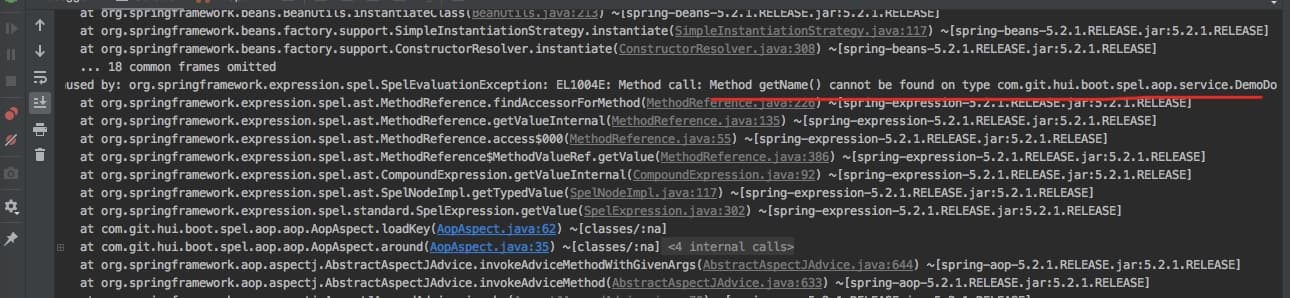
直接提示方法找不到!!!
3. gson序列化问题
上面的case中,使用的FastJson对传参进行序列化,接下来我们采用Gson来做序列化
1
2
3
4
| <dependency>
<groupId>com.google.code.gson</groupId>
<artifactId>gson</artifactId>
</dependency>
|
然后新增一个特殊的方法
1
2
3
4
5
6
7
8
9
10
11
12
| @Service
public class HelloService {
@Log(key = "'yihuihuiblog'")
public String hello(String key, HelloService helloService) {
return key + "_" + helloService.say(new DemoDo().setName(key).setAge(10), "prefix");
}
}
|
注意上面方法的第二个参数,非常有意思的是,传参是自己的实例;再次执行
1
2
3
4
5
6
| public Application(HelloService helloService) {
helloService.say(new DemoDo().setName("一灰灰blog").setAge(18), "welcome");
String ans = helloService.hello("一灰灰", helloService);
System.out.println(ans);
}
|
直接抛了异常
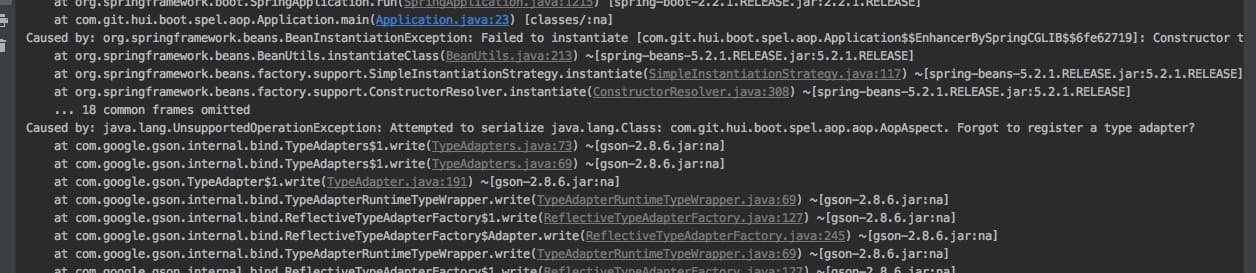
这就很尴尬了,一个输出日志的辅助工具,因为序列化直接导致接口不可用,这就不优雅了;而我们作为日志输出的切面,又是没有办法控制这个传参的,没办法要求使用的参数,一定能序列化,这里需要额外注意 (比较好的方式就是简单对象都实现toString,然后输出toString的结果;而不是json串)
4. 小结
虽然上面一大串的内容,总结下来,也就两点
- SpEL若采用的是
SimpleEvaluationContext,那么注意spel的功能是减弱的,一些特性不支持
- 若将方法参数json序列化输出,那么需要注意某些类在序列化的过程中,可能会抛异常
(看到这里的小伙伴,不妨点个赞,顺手关注下微信公众号”一灰灰blog“,我的公众号已经寂寞的长草了😭)
III. 不能错过的源码和相关知识点
0. 项目
AOP系列博文
1. 一灰灰Blog
尽信书则不如,以上内容,纯属一家之言,因个人能力有限,难免有疏漏和错误之处,如发现bug或者有更好的建议,欢迎批评指正,不吝感激
下面一灰灰的个人博客,记录所有学习和工作中的博文,欢迎大家前去逛逛

打赏
如果觉得我的文章对您有帮助,请随意打赏。

微信打赏

支付宝打赏
